The buried treasure game that became a soundboard
Why every sound on TapaBoom is its own little “secret”
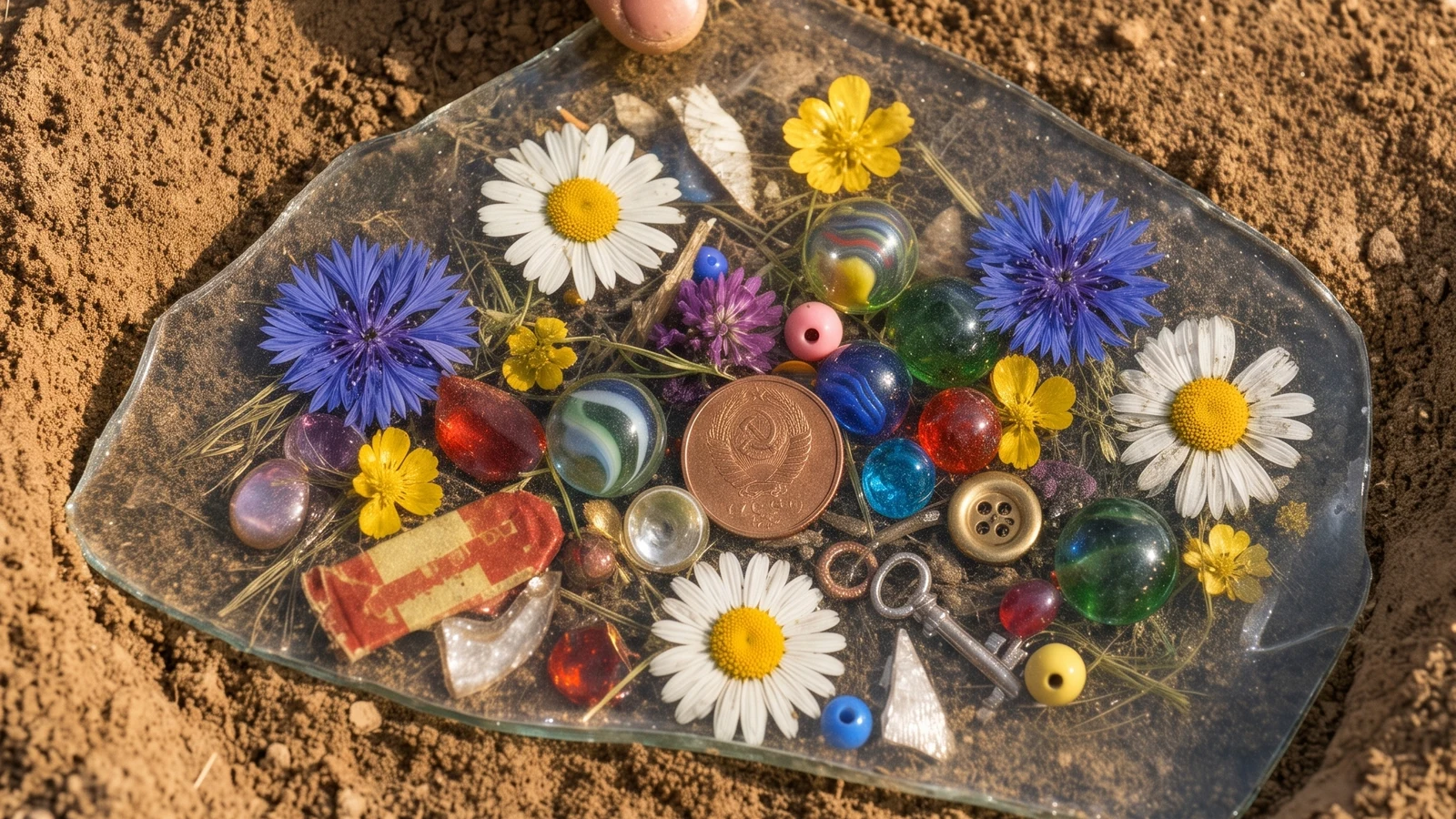
The game
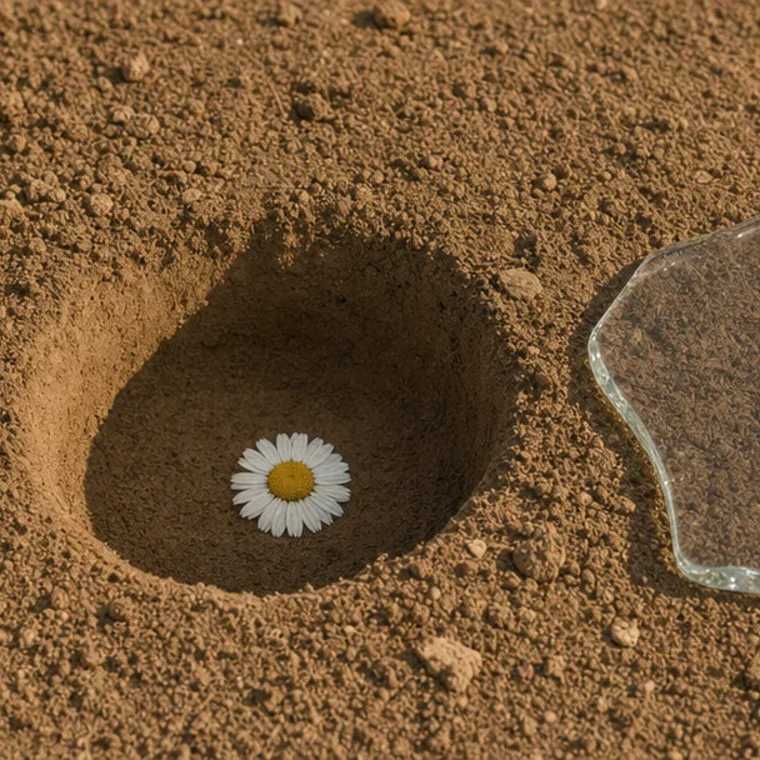
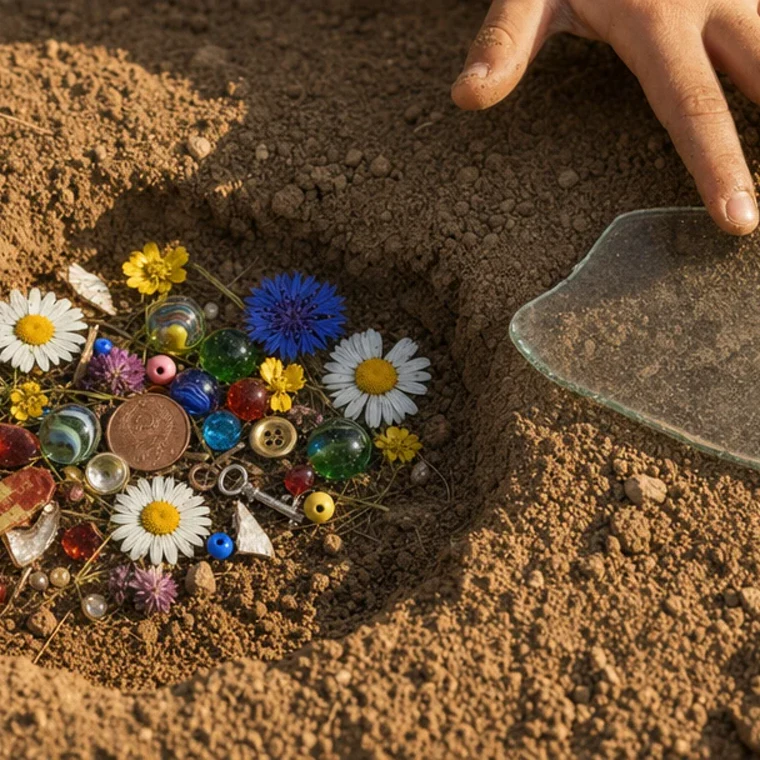
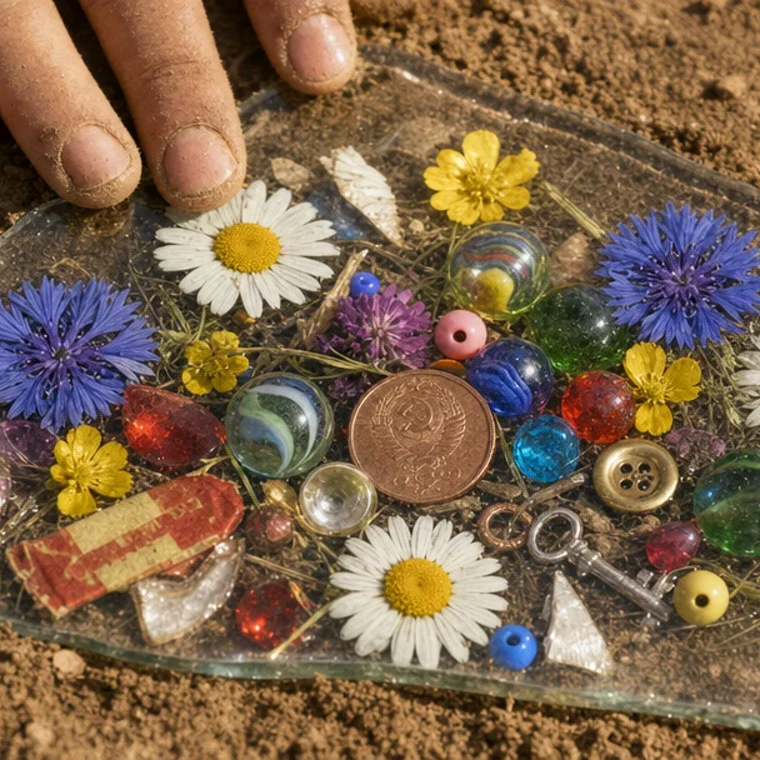
There was a game we played as kids in the courtyard of a Soviet apartment block. We called it sekretiki — “little secrets”. You’d dig a small hole in the ground, arrange a scene inside it — a chamomile petal here, a bit of colored glass there, a bead you found on the sidewalk, a pressed leaf — cover the whole thing with a shard of clear glass, and sprinkle a thin layer of dirt on top. A hidden garden under the ground. Nobody could see it. That was the point.
The trick was in the reveal. You’d bring a friend, kneel down, and carefully brush away the dirt with your finger, moving in circles from the outside in — never revealing the edges of the glass, only what was inside. For a moment, it looked like the secret garden was actually growing there, in the soil. Like a small window into a place that didn’t exist. Then you’d cover it back up and never show it to anyone else. That was the deal. It was yours.
I built TapaBoom because I never stopped thinking about that feeling.
Every meme sound on the internet looks identical
Grey grid, grey tiles, some text. The sound might be brilliant, weird, personal — but the button doesn’t care. It’s the same button as the 6,999 others next to it.
That’s what I couldn’t accept. If the sound is a little secret — a joke you and your friend share, a moment from a movie, a laugh that only makes sense in context — then the thing you tap should be a little secret too. Not a grey tile. A garden under the dirt.
So on TapaBoom, every one of our 7,000+ sounds gets its own hand-baked button. Not a photo — a composition of layers, the way we used to layer petals and foil. No two are alike, and the way they get built is where this story actually goes.
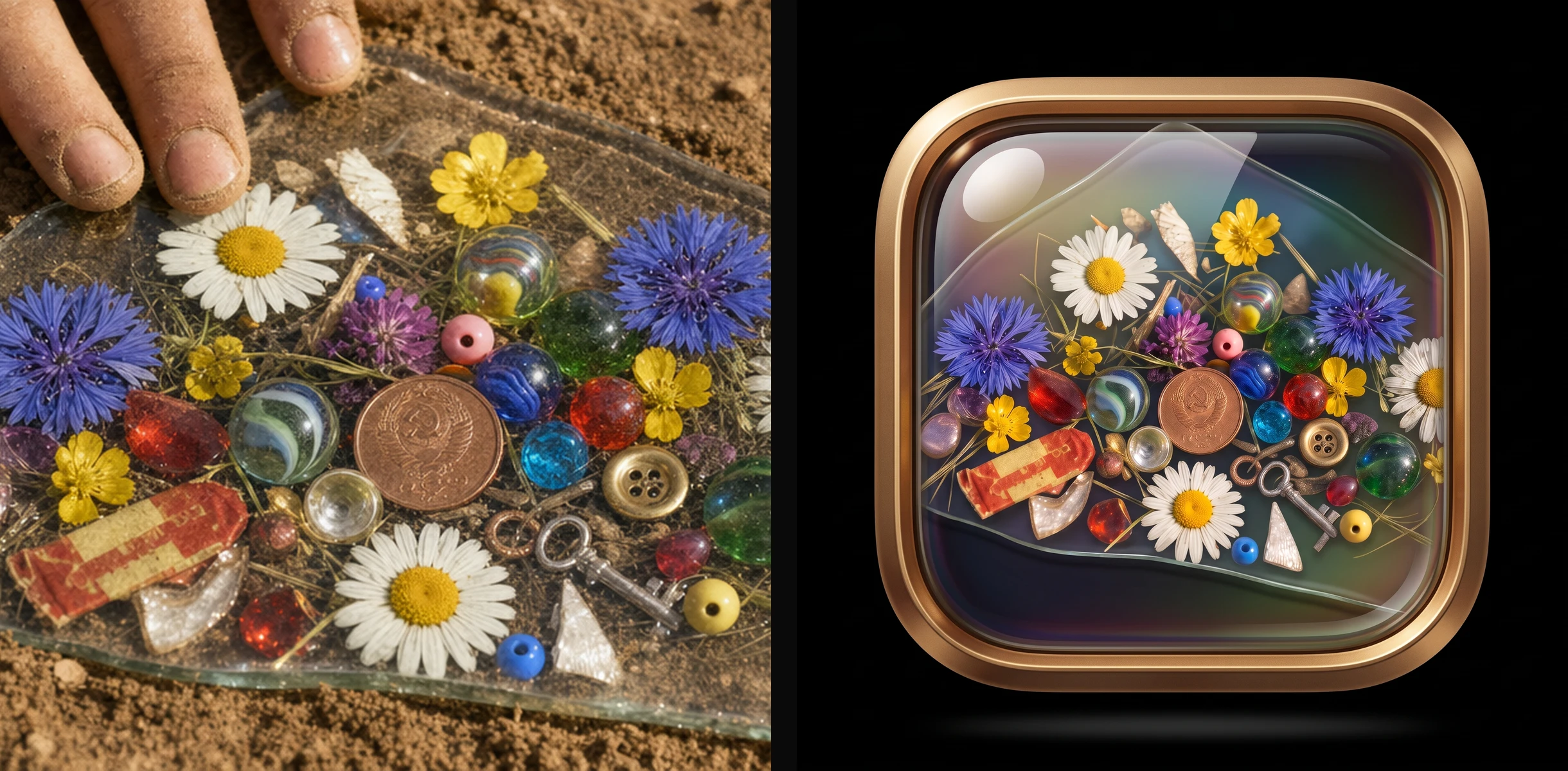
Same four moves, thirty years apart
This is the part that still surprises me. When we sat down to design how a button gets built, we did not set out to copy the game. We just kept asking what would make a button feel like something instead of a tile. Every answer we arrived at turned out to be a move from the courtyard.
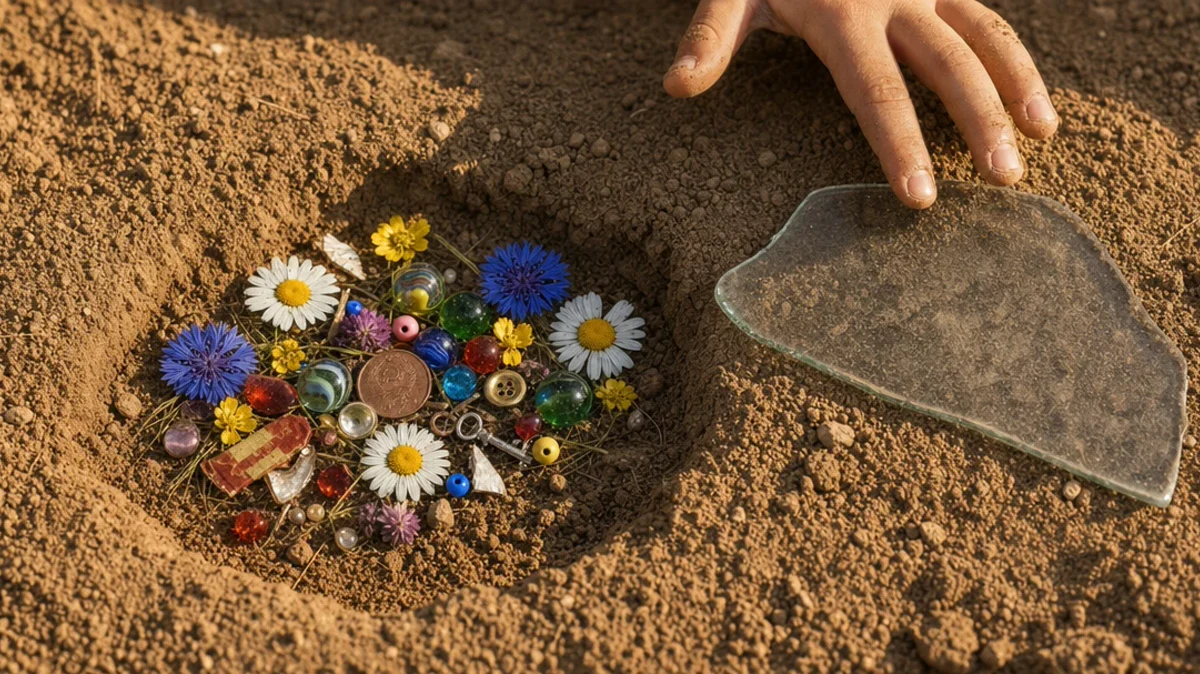
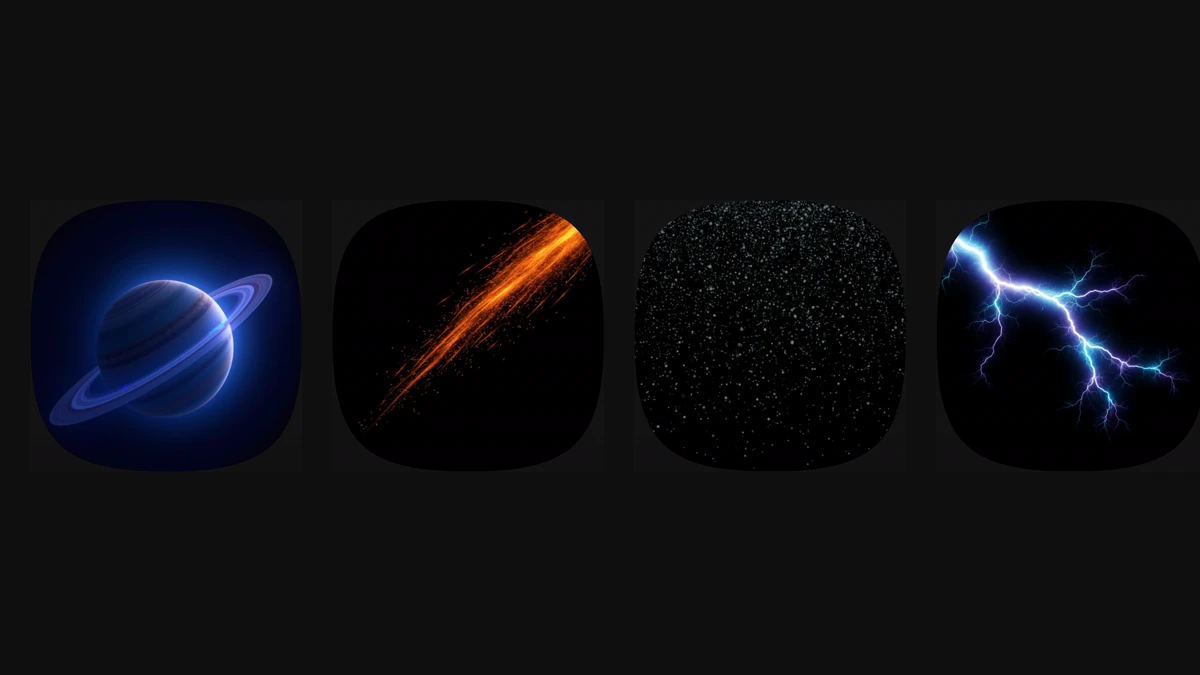
A petal, a bead, a scrap of foil. On their own, junk. In the constructor it is the same: an aurora, a streak of sparks, a dusting of light, a bolt of lightning — each one just a smudge on black until it sits next to the others. Nobody tells you the recipe. That was the whole appeal then, and it is the whole appeal now.
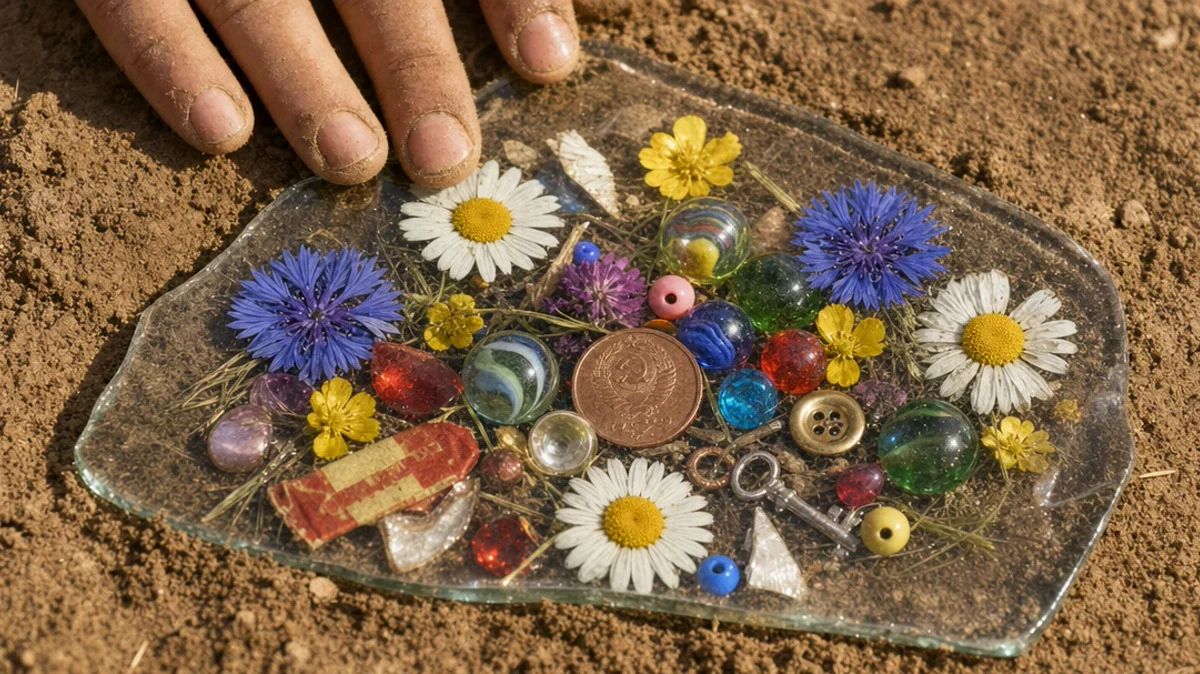
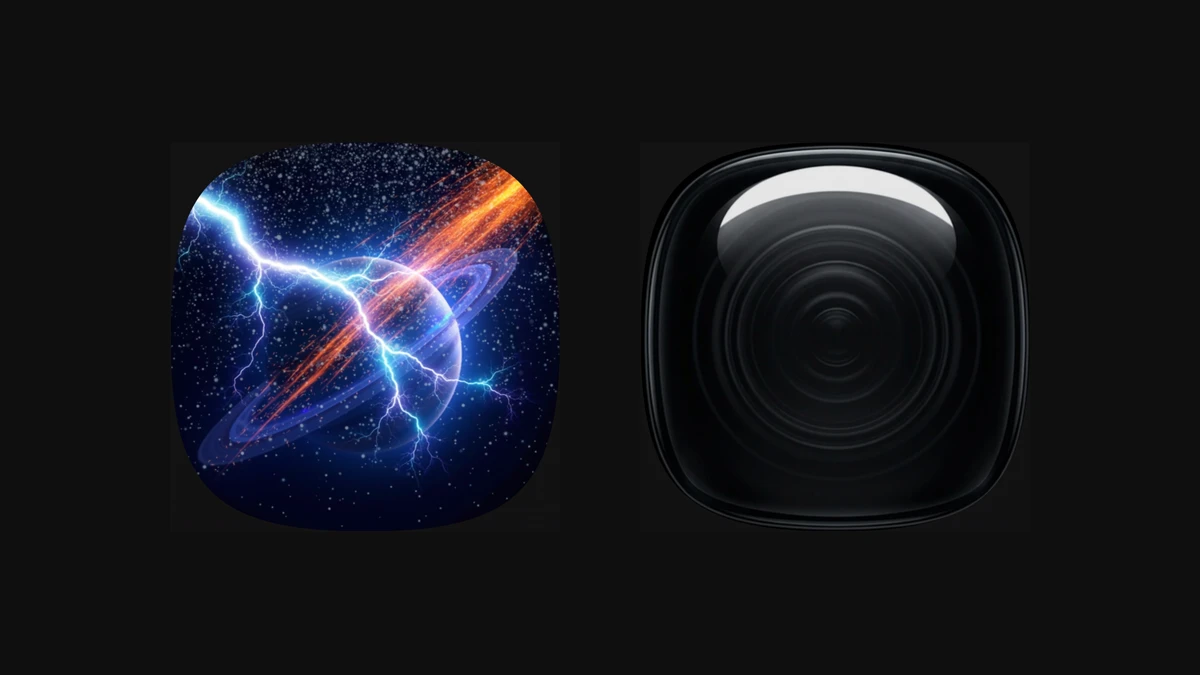
Everything is in place, and it is still just a pretty hole in the ground. The shard adds no new object — it adds depth, a highlight, a reflection of the sky. Our glass lens is a separate layer that does exactly the same nothing, and exactly the same everything.
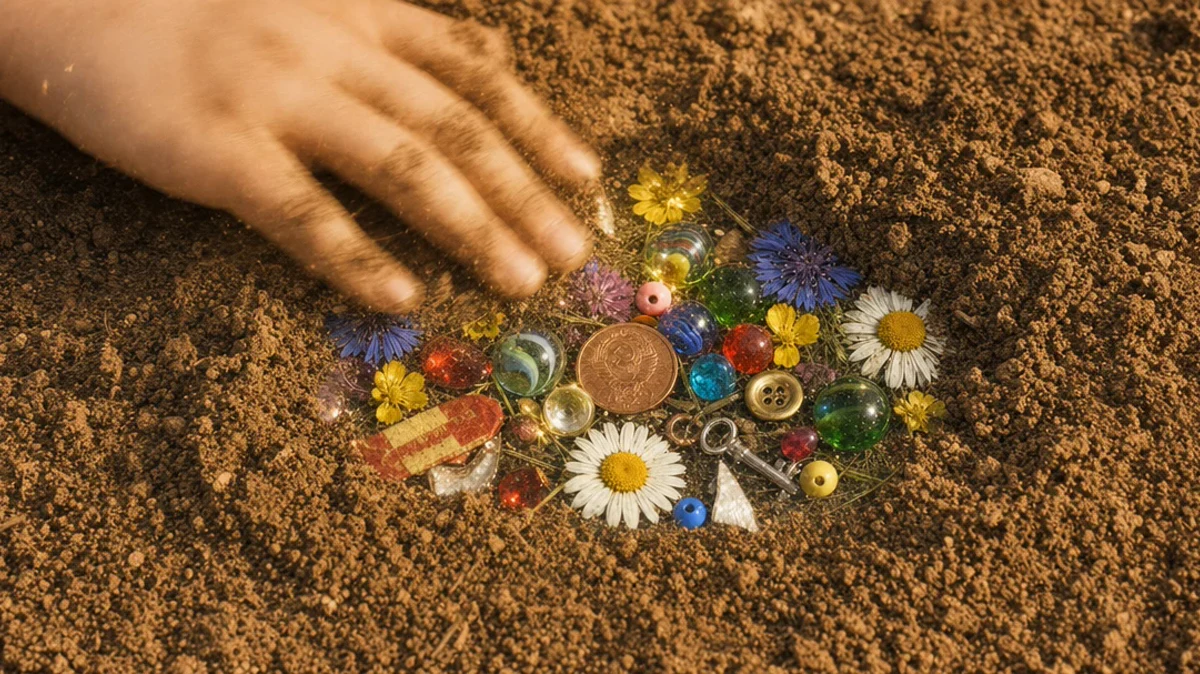
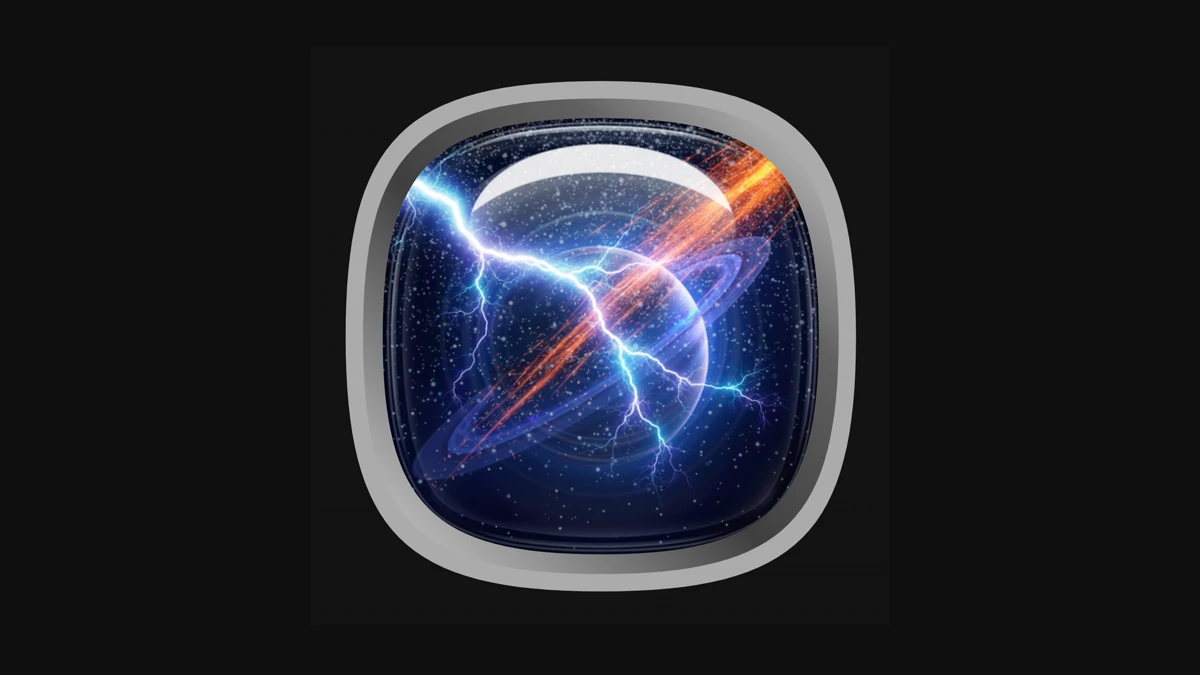
Glass on, dirt away, and the pile of small things is suddenly a secret. Glass on, frame on — tinted to match the artwork — and the pile of smudges is suddenly a button you want to press. Nothing was added but the glass and the edge. That is the entire trick, in both games.
Every button on TapaBoom is baked exactly like this and then flattened into one crisp WebP of about seven kilobytes — the layers disappear the way the hole disappears under a handful of dirt. What is left is a thing you tap. And when you tap it, it makes its sound: that is our version of brushing the soil away.
And you can make your own
The best part of sekretiki wasn’t showing them to someone. It was making them. Choosing which cornflower petal went in which corner. Deciding whether the glass in the middle or off to the side. Nobody taught you — you just knew. Everyone made theirs differently.
On TapaBoom there’s a constructor for exactly that. You upload your sound (a laugh from your grandpa, a line from your favorite movie, a weird noise your cat makes), and you build the button by hand:
- pick a base pattern from hundreds of textures
- drop a lens on top — glossy, cracked, wet, crystallized
- add an effect — sparks, bubbles, particles, a slow swirl of light
- choose how layers blend together (this is where it gets fun — one setting turns the whole thing into a completely different button)
- pick the frame color yourself, or let TapaBoom match it to your art
Then you press bake, and your sound gets its own button forever. It lives at its own URL. When you share the link, the friend on the other end sees your button, not a grey tile.
Under the hood
The technical side is the same idea, just for grownups. Every button is a stack of PNG layers with alpha, blended in the browser preview, and baked server-side into one small WebP (~7 KB) using a ComfyUI pipeline with a Flux base model. The frame is picked from the dominant color of the finished artwork. The sound gets transcribed with Whisper so it can be searched by what’s actually said inside it.
But under the tech, it’s still just kids in the yard, layering things carefully under glass.
The invitation
If any of this rings a bell — if you had your version of this game as a kid (I’m told the American version was making terrariums; the Japanese one, “kraft glass” collections; there’s a Balkan version with buried marbles) — TapaBoom is for you.
Upload a sound. Build the button. Share it with one person who’ll get it.
That’s the whole thing.